Top 10 NYC Bars That Are So Much More Than Beer

Standard

After a few years in the city, when you’ve graduated from the 13th Steps and Bowery Electrics of the world, packed up your Murray Hill apartment and moved down 20 blocks to the East Village, it becomes time to re-evaluate things a bit.  But even if dancing on the side-booths of 200 Orchard may have lost it’s appeal, innumerable treasures remain in some establishments that were once overlooked.  Here are 10 of the best.


Ace Bar (East Village; 5th St. between Avenue A and B)

Why it’s more than a bar: Games galore

Pick your poison – with Skee-Ball, darts, two pool tables, Buck Hunter, pinball, a jukebox, and a perpetual balance between inhabited and packed, Ace Bar is an entertainment palace. It’s an unpretentious East Village bar with moderate prices and a wide range of clientele. Sure, I’m partial to the place because it’s where our 2013 NYC Skee-Ball Championship team was born, but it can hold its own with anyone.

The Gutter (Williamsburg; 14th St. between Berry and Wythe)

Why it’s more than a bar: Reasonably-priced bowling, full bar, and a concert venue all-in-one

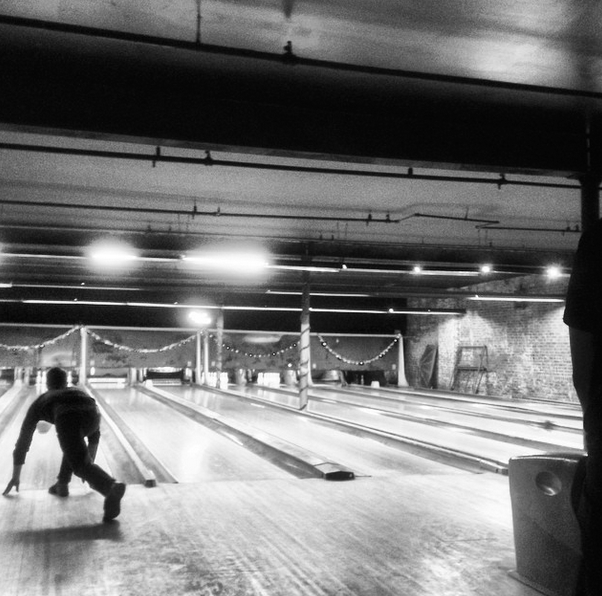
Yes, this is the place that infamously led to social media’s coining of the term ‘Ebowla’, but after an Gutterextremely brief hiatus, they’re back up and thriving. Primary a bowling alley, this Williamsburg establishment also features a full bar with billiards, booths (you can bring/order outside food), pinball, and bubble hockey. They’re so hip the wood for the lanes was shipped in from an Ohio alley (and still features the original ads from the ‘70s), and they play host to local music for <$10 on the weekends in the Spare Room. After discovering this place, I’m done going to Lucky Strike to pay $50 to squint through strobe lights and stare at pins signed by Kid Rock.
Red Lion (Greenwich Village; 151 at the corner of Bleecker and Thompson)

Why it’s more than a bar: Live music every night, friendly staff, cheap

Now that we’ve graduated from Canal Room/Le Poisson Rouge, Red Lion is the go-to live music spot. Although Jersey Shore bands still play cover songs, the setting is at least more intimate and the average age is over 18. Basic beers are cheap and there’s even a drink kiosk set up off stage left. Plus, Le Poisson Rouge is only one street over if you still feel the need to wail out Jesse’s Girl and see the “special guest” of a disturbing modern-day Mr. Belding.

ComedyCellarComedy Cellar (West Village; 117 MacDougal between W. 3rd St. and Minetta Lane)

Why it’s more than a bar: Gut laughs and celebrity hangout for the price of a movie

They put on five shows a night (from 7:00 to after midnight), and every show features at least six sets in less than two hours. In the past three years I have seen countless A and B-list folks (Louie CK, Amy Schumer, John Mulaney, Jeff Ross, and Dave Attell come to mind), and walk-in guests are frequent (Aziz Ansari showed up to my show three times in a row). Plus, you get to hang out with the comedians upstairs at the Olive Tree Cafe afterwards, and most of them put on a smile like you aren’t even bothering them.

Foley’s (Midtown; 33rd St. between 5th and 6th Avenue)

Why it’s more than a bar: Spacious sports bar with friendly staff, celebrity sightings, and rare Midtown charm

It’s part baseball bar and part museum, and after doing it once, you’ll realize there’s no reason to do a fantasy draft anywhere else in NYC. The baseball memorabilia hung up in the place easily tops the seven-figure mark*, and the owner is often hanging around to throw some trivia at you and show you the gear and signatures of all your favorite players.

We like to rent out the basement (chock full of 1990s regalia – think life-size Shaq posters), even if sometimes there’s standing water on the floor.

It’s a popular hangout when professional teams are in town, and last time I was there John Fox sat at the bar nearby while Skip Bayless filmed a commercial.


Barcade
 (Multiple Locations; Williamsburg, Chelsea, East Village)

Why it’s more than a bar: Food – drink – arcade

You get to play NBA Jam, Turtles in Time, and Mortal Kombat while drinking craft beer. Oh, and IMG_2802every game is a quarter. Truly a step up from sneaking into Chuck E Cheese as an adult.
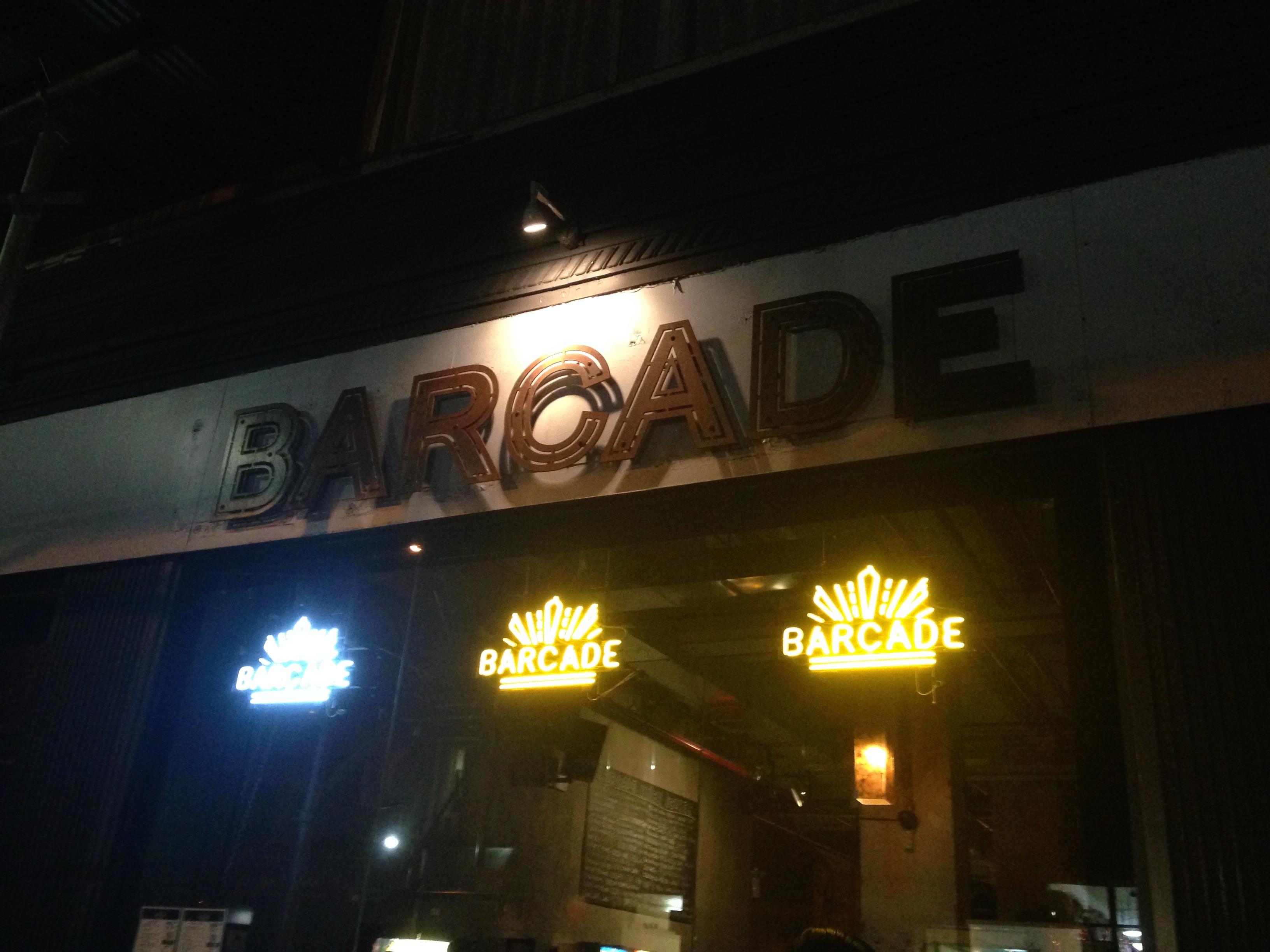
I haven’t been to the Williamsburg one yet, but I can say the Chelsea location has the upper hand over the new one on St. Mark’s, with a wider selection of games, full food and liquor menus, and the fact it simply feels more like a real locale. East Village is good for old-school gaming, but it’s dark, crowded (I think the building’s a former karaoke joint), and is packed with NYU students and other youngsters lurking on St. Mark’s. Having said that, they are all great whether you go solo, with a friend, or in a group, be it for for 20 minutes or a few hours.

Royale (East Village; 10th St. and Avenue C)

Why it’s more than a bar: Great burgers, outdoor patio, neighborhood feel

This is a perfect spot when there is disagreement amongst the group on what type of day you’re wanting to have; it’s a full bar on the inside, an outdoor space with patio/garden/TV setup, and there’s an open kitchen grilling up NYC burgers (and not much else) that fall into at least the 90th percentile. It’s a solid option whether your’e wanting to watch sports, drink, dine, or any combination of the three. A bit of a trek down on Avenue C, but very worthy of being in the rotation.

Fat Cat (West Village; Christopher St. between Bleecker and 7th Avenue)

Why it’s more than a bar: Games, jazz, loungeFatCat

Yes, beverages are limited to just beer and wine, but they make up for it with a live jazz band and 10,000 sq. feet filled with ping pong, pool, and foosball. There’s also something about commingling with friends in rustic armchairs in a West Village basement that brings one back to how the neighborhood must’ve felt when beatniks roamed free. It feels like a venue where every 10-year-old would want their birthday party to be if they were old enough to drink. Which makes sense since it’s filled with of-age “adults” behaving like 10-year-olds.

Flight 151 (Chelsea; 8th Avenue between 17th and 18th)

Why it’s more than a bar: It’s not

In truth, Flight 151 probably doesn’t belong here. But as my favorite bar on the West side of NYC, it had to make the list. You can color on the tables like it’s Macaroni Grill, and the bartender Steve is a local legend. It’s cheap ($3 Rolling Rocks), still has non-flat screen TVs, and there’s trivia on Thursdays (no teams – yell out the answer and get a free drink).  At one point I started going here so much that my friend threatened an intervention if my obsession didn’t subside. Once I started going for brunch, I knew it was too much.
RuysRudy’s (Hell’s Kitchen; 9th Avenue between 44th and 45th St.)

Why it’s more than a bar: Come on – it’s Rudy’s…defining Dive Bar one hot dog at a time

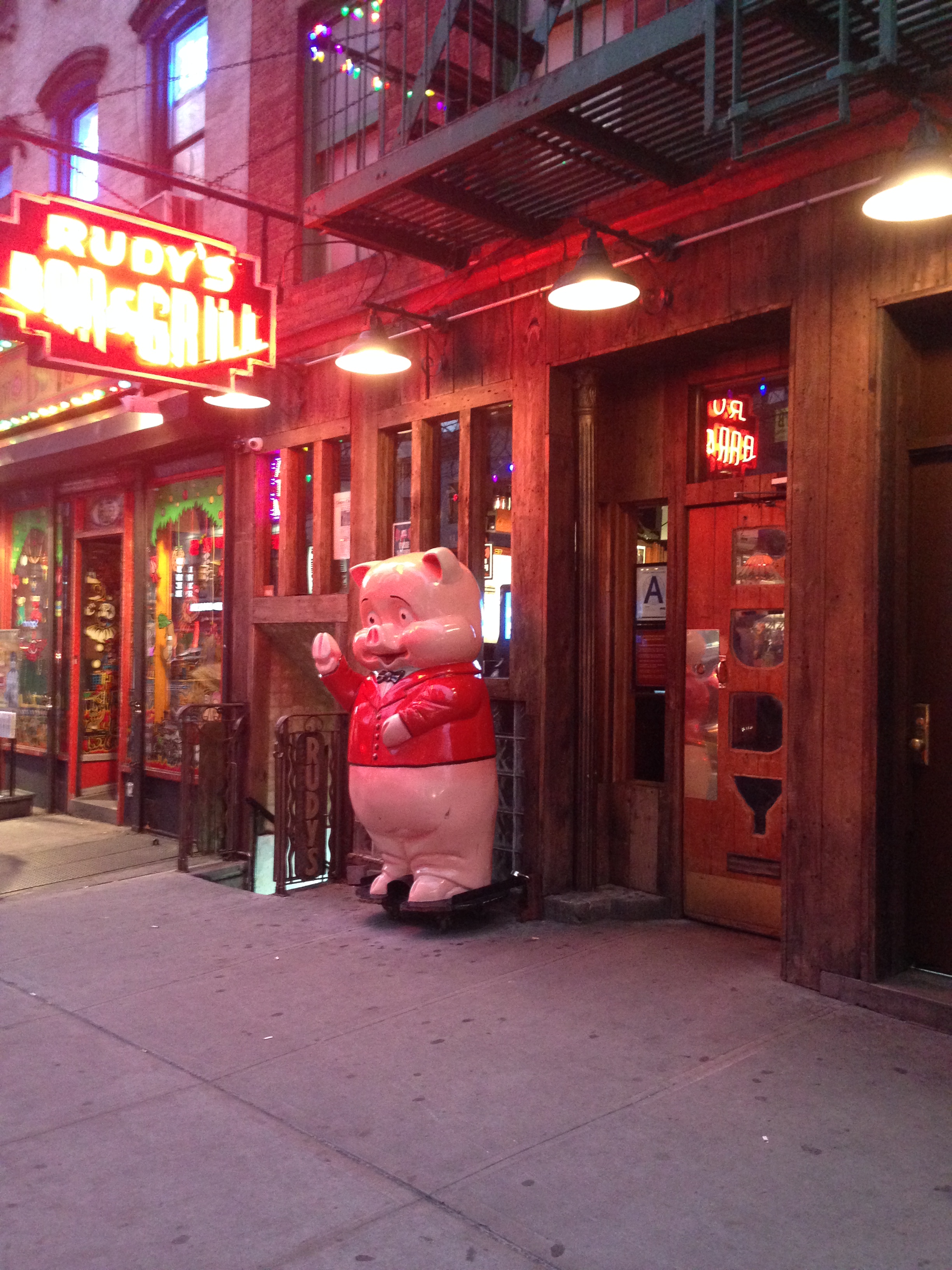
This legendary Hell’s Kitchen’s dive is also (appropriately) one of Anthony Bourdain’s favorite day-drinking spots. Pitchers of beer (Rudy’s has their own blonde and red ales) go for the price of a normal pint and come with free hot dogs. Park yourself in a duct-taped booth or venture outside during the summer to the courtyard. If you have time and aren’t an idiot, spend a few minutes talking to the Hagrid-type character hanging by the door – Tracy Westmoreland is a fascinating NYC figure and the only man who ever operated an underground bar in a subway station.

BONUS: The Rooftop of 62 Bloom (Apartment complex on Avenue B between 4th and 5th St.)

62B

Why it’s more than a bar: It’s not even a bar, but it deserves to be on this list for many reasons…

There lives a place in the once-forgotten bowels of Alphabet City, where half-hipster 20-somethings converge on an expansive rooftop equipped with Adirondack chairs, gas grills, and friend-of-a-friend DJs. It’s an unsupervised palace, where the joys of a poolside Las Vegas club can be had at the expense of someone’s tenancy. Sometimes the DJs get arrested, and no one really knows who actually lives here, but this neighborhood nuisance is truly marvelous. The rooftop of Bloom 62, a two-year old contemporary apartment complex yuppie haven on 4th and Avenue B is as enjoyable as a night out at a club (and even more-so when you factor in the cost of drinking and free views of the Midtown skyline). Just hang outside the gate until you meet someone who lives there.

Honorable mentions: Croxley’s Ale House, Cienfuegos, Kettle of Fish, Rough Trade, Sing Sing Ave A, John Brown Smokehouse, Mr. Biggs

*Editor’s Note: The original version of this post estimated the value of memorabilia at greater than $500,000, but after hearing from the bar, it’s clear this this figure was vastly underestimated.  Go to Foley’s and see this ridiculous collection for yourself.
The Tale of the Ghost Bodega

Standard

I declare this, The Tale of the Ghost Bodega.

It doesn’t add up. Back in 2010 I lived in no-man’s-land Hell’s Kitchen – we’re talking newly developed 10th Avenue territory near the old Hudson Yards and Javits Center – and I was in utter dismay when I heard what our local sandwich shop was paying for rent.

I’ll call this an “upscale bodega”, if there were such a thing. It’s blessed with a name that suggests a genuine establishment (i.e., doesn’t contain the words “Gourmet”, “24”, “Cigarettes & Candy”, or “Periodicals”). Sure, they had the standard $7 subs and salads, but you could also get a side of Snapple for $3, and if your Smart Water was big enough, it just might cost a Lincoln. So, I knew they were trying to make up that rent somehow. But how much rent?

Apparently $30,000. At least that’s what the manager told us. Granted, this is the same man who relentlessly preached his alternative religious views and bestowed free literature upon us on us each holiday season while slicing spiced ham, so I admit that credibility might be a concern here. Regardless, I only had his word to go on, which translated to $360,000 a year, or basically $1,000 a day in rent alone. I was astonished, and while skeptical, I knew that in New York City one should never dismiss the price of anything, regardless of how insane it sounds.

Soon after, when I heard about the Gray’s Papaya landlord wanting to raise their rent to $50k(!), I realized this was probably for real . Suddenly selling overpriced Snapple seemed like an easier way to turn a profit than a glorified hot dog stand.

But then the real question came along: how can there be so many bodegas that are still in business?

Sure, I realize that there have been more 7-11s popping up on street-corners lately, replacing “News and Dairy”‘s wilted lettuce with fresh cheeseburger rolls and $5.99 large pepperoni pies, but I really can’t fathom how so many standard, low-scale Ghost Bodegas are still afloat.

What’s a Ghost Bodega, you ask?

Trust me, you’re plenty familiar with them. I’m referring to all of those fruit-on-the-outside joints with Haribo licorice wheels spinning around on candy racks that have acquired a thin layer of dust. These are the same places that have the Vitamin waters with faded labels and e-cigs with packaging from the ’90s. Some of them, heaven forbid, still sell DVDs for the price of two months Netflix.

They’re something of the past, a thin veil of what once was, and I can’t conceivably understand how they can be making money.

I know the marketing can’t be doing much to help. Have you considered the names of these places?   It’s as if the bodega owners surveyed a group of New Yorkers in ‘80s and asked what they wanted from their local market at 4 in the morning before a cross-country drive.

“Oh, I’d like a pack of Reds, a liter of Crystal Pepsi, maybe some Turkish Taffy to slap on the dash, and how ‘bout a Road & Truck and a Reader’s Digest. I do have a soft spot for that Laughter is the Best Medicine section.”

Of course, rather than call themselves “Stock Up”, “Any & All”, or “Needful Things”, they seem to just combine as many of the products as possible into the name, with something like “24-Hour-Beer-Tobacco-Lotto-Candy Inc.” as the typical result.

For the walk-in crowd looking to pick up a quick item, I know it really doesn’t matter what the name of the place is. But, if I lived in that area and all bodegas were essentially the same, you better believe my friends and I would always choose “names” (I’m thinking Spyros here) over “XYZ Grocery”.

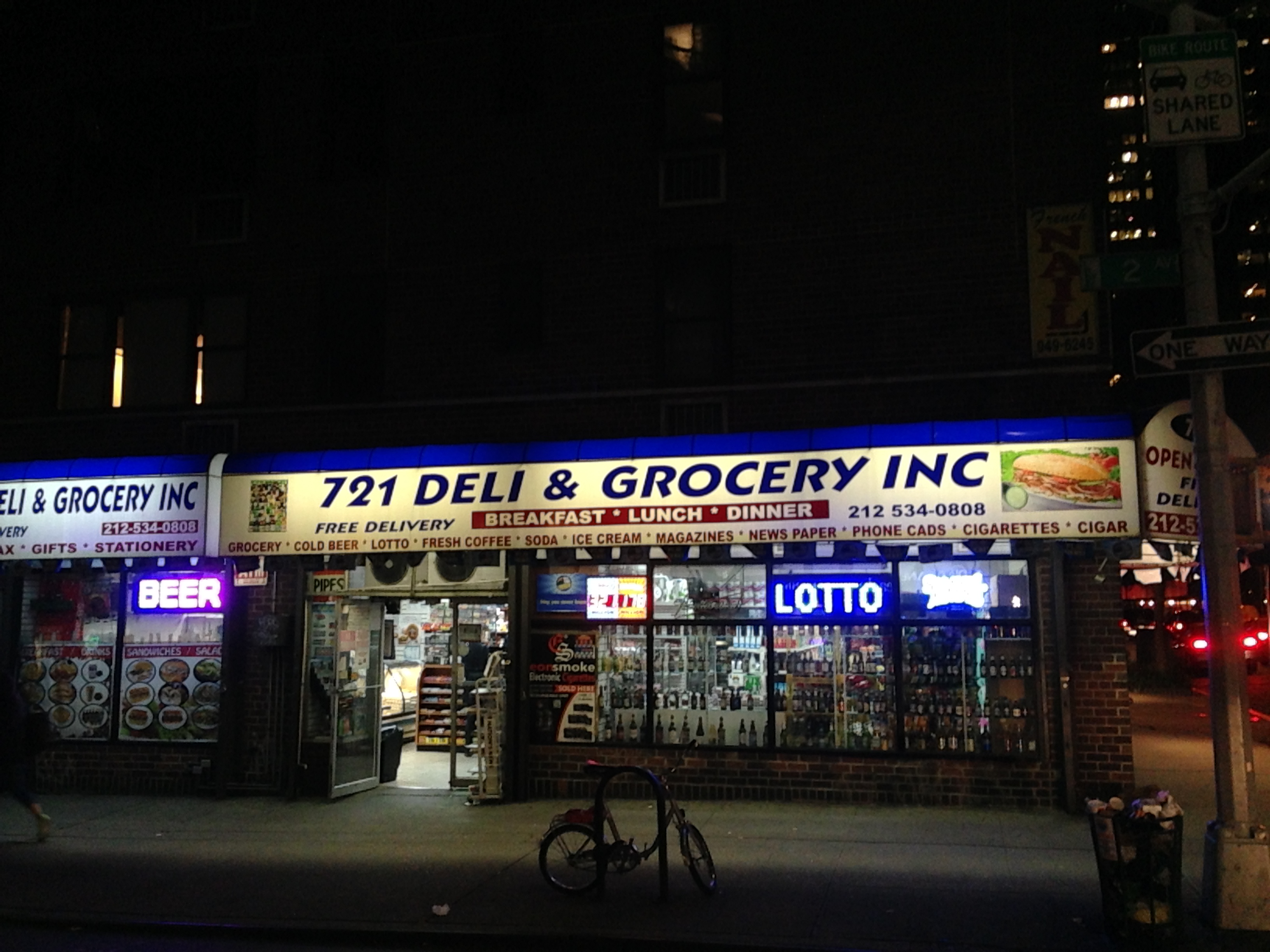
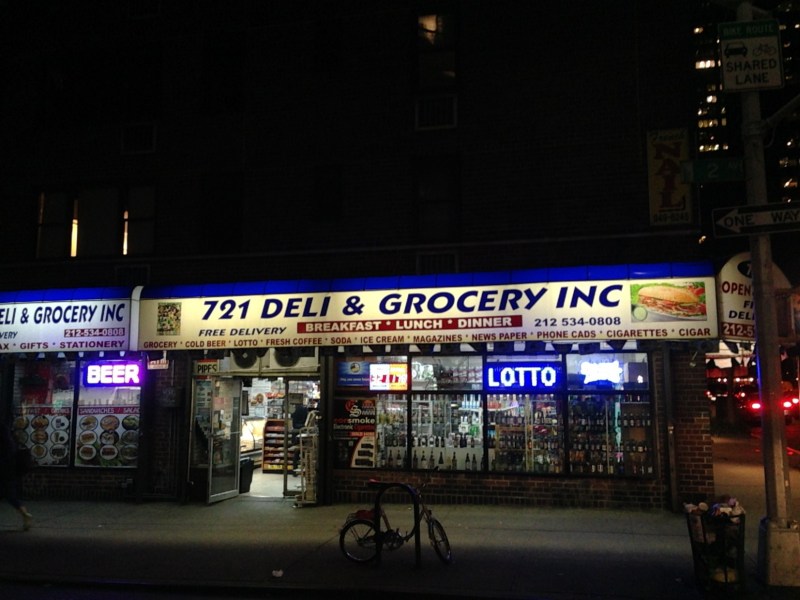
In fact, I actually watched a new bodega go in two years ago on 39th and 2nd. This place had an opportunity to call itself ANYTHING – and do you know what the owners chose?

721 Deli & Grocery Inc.

721

The sign specifically notes that 721 sells, among other things:

  • Newspaper
  • Phone Cards
  • Fax Services
  • Stationary
  • Breakfast, Lunch, and Dinner

I don’t think any of that is luring me in off the street.

Sometimes I wonder if this general sign tactic is similar to the greasy spoon Chinese restaurants purposely misspelling menu items to increase the perception of authenticity. But what would be the point of that here? What’s it mean to be an authentically average bodega? If I see this sign, is it supposed to alert me that the place I’m walking into is guaranteed to have melon flavored Hi-Chews, Goya black beans, unmarked yet commercially made loaf cake, stray cats, and a $10 credit card minimum?

I want these bodegas to tell me – what do you have that differentiates yourself? What do you have that Duane Reade doesn’t, besides a more rational employee attrition rate and Wheat Thins under $8? Please Bodega, Be Well and tell us about it.

So how do they make any money at all?

Are the margins so high on shrink-wrapped strawberry jam pinwheels that thousands of dollars are taken in each day, or is something else going on?

I could see 20 years ago before the Starbucks influx, maybe, but not today. Not when the only time I go in there is for a cheap sub sandwich, a bottle of water, or a pre-packaged crumb cake I want to try as an evening experiment.

Maybe a lot of these places aren’t actually making money and are hanging on by a thread, but a lot of them really look like they’ve been around for a LONG time.

And it’s not even just bodegas. There are ghost restaurants too.

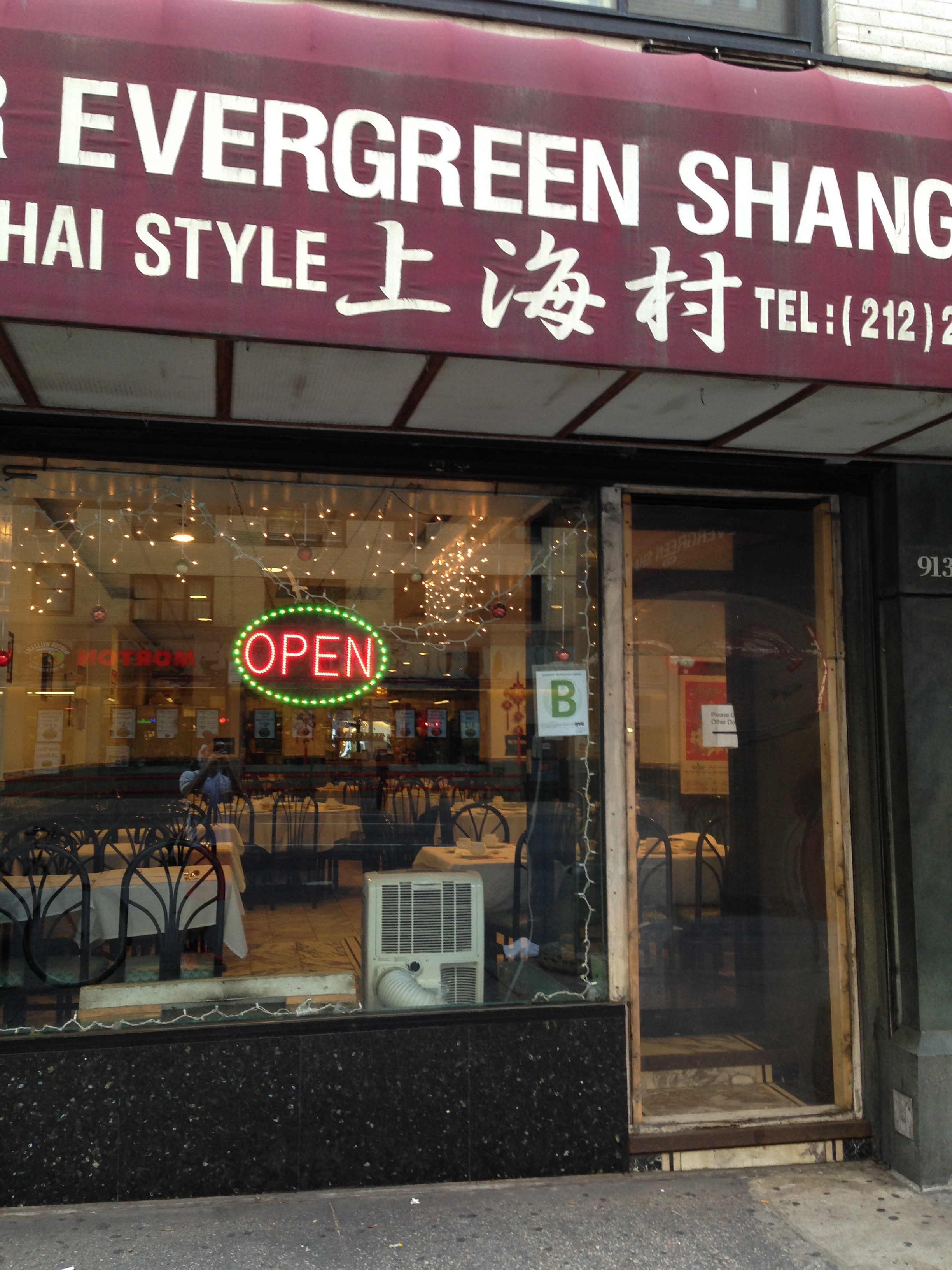
I think my favorite example of this is a Chinese restaurant near me in Midtown East. It has a large dining area that’s perpetually empty no matter the day of the week, save for a table of the family who owns the joint. And there’s actually a full bar in the back where a bartender stands around waiting, like the start of a tense scene in a Bond movie where James walks into an empty room only to be bombarded from behind.

I think Lawrence C. explains it best on Yelp:

“What I’m saying is, this joint is shady in a way that Midtown East usually doesn’t engender. Poorly lit (just as well, with decor that uncannily recalls a highway rest stop’s public bathroom), outfitted with frankly decaying lazy Susans, and, again, deserted. The place should’ve been in “I Am Legend” somewhere.”

Evergreen

I don’t have the answers here. Even if they own the building, why aren’t they renting out the space to more profitable tenants?

I will say that these places do provide me some fairly serious entertainment. One of my favorite post-gym activities is venturing into an empty Tasti D-Lite nearby and pretending I’m in a 1991 food court, with the pink floor tiles all chipped and faded like Chiclets at the bottom of an old gumball machine.  I think I’m the only one who has bought their marshmallow gummi sharks this decade.

Anyway, at the end of the day I’m left with a few ideas, but frankly I still don’t really understand.  Here’s what I’ve got as theories for how these places remain open:

1) There’s more to the story – whether this means the shop or restaurant is selling used playground equipment on eBay or something more unsavory is going on behind closed doors, there’s more than meets the eye.

2) The owners of the shop/restaurant own the building and it is more affordable/tax advantageous to keep operating with minimum costs than to rent it out.

3) They’re losing money and it’s only a matter of time before they’re out.

It’s sad that this even has to be written.  It’s sad that a small business is assumed to be failing because a city is so chain-ridden and expensive and the 7-11s can’t even buy as many shops as they want yet.

But, I guess that’s why we have Forgotten New York and Scouting New York to provide a way to look back at the way it all once was.  As for me, I’m off to get a shaken martini and half order of Kung Pow prawns.

Seinfeld: A Love Letter – The Golden Age, Part I

Standard

I want to preface this by saying that to cram the best three seasons of the greatest TV show of all time into one digestible post would be a true disservice to the show.  So much could be written about these seasons (and even each episode) that I really don’t know where to truly begin or end. So, I’ve decided to break this second era (“The Golden Age”) into two segments. We’ll do a little background, reminiscing, and one full episode breakdown below, followed by a separate post in the coming days specifically focused on what is possibly one of the finest episodes in TV history.

Regarding the Seinfeld series overall, I was originally going to write three separate Seinfeld posts (one on each three-season era).  However, since we’re now on pace to have a total of at least four, I have a feeling that posts about the show will continue to surface indefinitely on NMNY. And while I know that even two posts on these middle three seasons doesn’t provide the era the justice it deserves, we must push forward and honor Jerry the Great, lest we succumb to the fate of the Today Sponge.


I have to believe that few would argue Seasons 4 through 6 of Seinfeld (airing from 1992-1995, which feels surprisingly early) weren’t the show’s Golden Age.  And yes, even a show as fantastic as Seinfeld, where every season and every episode has its highlights, has its relative downfall, where they too, jump the shark.  Now, whether that occurred with Susan’s death, when Larry left the show, or during the finale itself is a whole separate conversation for The Cartoon Years.  But we can go back to that later on.

So what makes Seasons 4-6 the Golden Age?  First off, during the first three seasons of the show, Seinfeld never once cracked the Top 30 in the Nielsen ratings.  Then, in 1992 they slipped in at 25 for Season 4, and then climbed to 3 and 1 respectively the following years. In fact, Season 4 ended up being rated the number one television season of all time by TV Guide.*

At this point, Seinfeld had started to become the talk at the water-cooler (a concept on its own which would be completely foreign to Jerry), and the show took on that “Breaking Thrones” effect, where the question changed from “Do you watch?” to utter disbelief if someone didn’t. The show was presenting absurd premises (The Bubble Boy, Junior Mint, Puffy Shirt, and Marine Biologist come to mind)  in a realistic way, with characters who had now matured – not as people, of course – but into their solidified on-screen personas. They had hit the peak; it was real, and it was spectacular.


Season 4’s specific success parallels the 7th season of Curb Your Enthusiasm, with the show-within-a-show story arc guiding many of the episodes (“Jerry” in Season 4, and “The Seinfeld Reunion” in Curb). I’m thankful my Seinfeld obsession was shared by many others by the time the Feld reunion aired, as many of us crowded around within The Nursery to watch the projector for the semi-nostalgic bliss that was that season’s finale.

*As apt as I am at creeping around Google, I really can’t seem to verify this outside of a Seinfeld-specific wiki site, but it’s all someone’s opinion anyway, so I’m OK with it.


"The Nursery" (61 West Kendrick), where the Seinfeld Reunion viewing party was held.

“The Nursery” (61 West Kendrick), home to the Seinfeld Reunion viewing party.

Season 4 alone brought us Kramer in LA (“The Trip”, parts one and two), “The Bubble Boy”, “The Virgin”, “The Pick”, “The Outing”, “The Implant”, “The Junior Mint”, everything centering around the “Jerry” pilot, and yes, “The Contest”.

Getting to rewatch Jeremy Piven play “George” after enjoying years of Entourage, and to enter college armed and ready with trivia that Bob Balaban (a.k.a. Russell Dalrymple) was in fact a Phi Tau (the original) at Colgate allowed the show to transcend time, seamlessly blending my youth with the years ahead.

And if I may, here’s one more fun fact about the “Jerry” pilot:

Larry Hankin, who plays Tom Pepper, who steals the raisins and plays Kramer in the fake pilot – can be seen in both Billy Madison (as Eric Gordon’s sidekick), as well as Home Alone (as Officer Balzak, dunking that donut – “Has the child been involved in violence with a drunk family member?”).

And yes, Hankin was also one of the many Seinfeld-Breaking Bad connections as well.

Now, before progressing into what I feel is the obvious (and deserving) choice for the best episode of the era, I’d like to discuss the finale of the 5th season. I can’t honestly say if I think this is one of my top five episodes of all time; but, I really can’t rank 90% of the episodes anyway, so I’m going to discuss it here.


Season 5, Episode 22 (Finale): The Opposite

What begins as the ever-familiar uneven conversation of George examining his failed adulthood, quickly morphs into an all-out reversal of actions. Knowing that “every decision [he’s] ever made…has been wrong” leads George to alter every bit of his daily routine and instinct, beginning with swapping out tuna salad for chicken. Soon after, he notices an attractive woman staring towards their table (Dedee Pfeiffer, sister of Michelle), and with only a hint of hesitation, George approaches and declares, “My name is George. I’m unemployed and I live with my parents.”

The rest of the episode follows George as he continues to find success with a newfound Peter Gibbons looseness and confidence (first the beautiful woman, followed by a job with the Yankees [albeit as the assistant to the traveling secretary]), while Elaine gets dumped, kicked out of her apartment building, and single-handedly brings Pendant Publishing (those bastards) to the ground.  As she states it, “[She’s] become George.”


I can’t help but keep thinking about Season 8’s “The Abstinence” when analyzing “The Opposite”, as we deal with a similar situation (George’s improved intellect, with Elaine’s own abstinence draining her of all intellectual capabilities).  The fact that Seinfeld is able to successfully create these alternate versions of the characters speaks to the ability of the writers and actors to create such strong, unwavering characters in the first place.  They’d gotten to a point where the characters were so well defined that they could manipulate and bend them in way to propel things to another level (and at this point, not in a cartoony, caricature of a way).  We’re four seasons in and we know enough about George’s life and mannerisms that it’s utterly absurd to see him behave this way.

It seems as if the show picked up on this too, as even beyond “The Abstinence” we get another role reversal later on in “The Bizarro Jerry”, and then a literal reversal of time in “The Betrayal”.  George’s ability to succeed with women returns during “The Little Kicks”, when he’s portrayed as the “bad seed” in Elaine’s office as a scapegoat for her dancing.  With “The Opposite” and “The Little Kicks”, it’s as if George has unknowingly discovered Neil Strauss’ world a decade early.

Of course, throughout all of this in “The Opposite”, Jerry’s life remains exactly the same – he’s Even Steven – and today, this coincides with his easy-going self. He spends his time buying cars, living in Billy Joel’s old Hamptons home during the summer, and doing charity work and stand-up (often simultaneously).  My favorite line in the first season of Comedians in Cars Getting Coffee is when Ricky Gervais says to Seinfeld, “You’re like a young king, aren’t you?” poking fun at Jerry’s free-wheeling personality and ability to live his life in any way he pleases.  And he is.  With Jerry’s real life persona so closely mimicking the character “Jerry”, it can be tough to remember that Jason, Julia, and Michael don’t act like their characters in real life too.  I’ll count that as a testament to the show’s writing and each of their acting capabilities.


It’s also in “The Opposite” that we start to see Seinfeld’s “celeb pull” at work when Kramer appears on Regis and Kathie Lee to promote his coffee table book.  Sure, Season 3 featured Keith Hernandez in “The Boyfriend” two-parter, but to snag a couple of talk show hosts from a non-NBC show seems like a big step up.  As the show went on, these guest celebrities increased, both as Jerry’s girlfriends (Terri Hatcher, Courtney Cox, Janeane Garofalo, Amanda Peet, Laurie Laughlin, and the list goes on…), and as athletes and better-known faces (think Letterman, Gumbel, and Giuliani).

It still boggles my mind that Derek Jeter made a guest appearance on “The Abstinence” and will be suiting up for the Yanks tonight, especially when a comparable guest appearance was made by Paul O’Neill, who’s been retired since I was in middle school. It’s a shame the joy I’ll feel on September 28th when the Yankees miss the playoffs will be clouded by the notion that the seemingly perpetual Jeter-Seinfeld connection will also be coming to a close.

I’ll finish with a mention two of the more obscure, lesser-known Seinfeld guest appearances that get me especially giddy:

In “The Fire”, there is a scene where George is speaking to “Eric the Clown” at his girlfriend’s son’s birthday party. George is baffled and upset that Eric doesn’t know who Bozo is, and later is the first to flee the apartment when a fire breaks out, tossing women and children to the side in the process. Eric ends up putting out the fire with one of his big shoes, saving the day and leaving George to bask only in his selfish flames. Completely covered in clown makeup, a wig, suit, and recognizable only by the familiar brusque tone we’ve become familiar with over the years (“Any Glen.”), Eric is played by Jon Favreau a full two years before Swingers came out.

It took a bit longer for my second-favorite guest to become a familiar face – and even now, he’s pushing B-list. Seen in “The Burning” as a medical student guessing the ailments of Kramer and Mickey as they “act” out various diseases, Daniel Dae Kim’s enthusiasm as he correctly exclaims “Gonorrhea!” precedes his first appearance on Lost by a full 6 years. With his med school experience, it’s no wonder Sun was able to teach him the English language so quickly.

With Seinfeld, a celebrity spotting is different. It’s not just about a game of media Where’s Waldo; it’s the allure of seeing obscure names and faces surface who had such minor roles 20 years ago.

Seeing Jin as “Student #1”, Jeremy Piven playing George, and watching Jeter on TBS syndication (followed by the YES Network an hour later) is what enables the show to continue to comfort me each day. Sure, the people, the jokes, the scenes, and the obsessions of Seinfeld’s characters are already just as relevant to the nuances of today’s society as they were then, but it’s the fact that they intertwine multiple decades of pop culture in my own life that allow it to be so relevant and powerful.

Cheers to another week of re-runs and The Golden Age, Part II coming soon.


Phirst Impressions

Standard

What a strange and beautiful day.

The first thing I noticed upon my arrival to the pre-concert destination was the complete lack of condescension or elitist attitude from the veterans. In fact, it was the exact opposite:

We had Jimmy, who was about to go to his 64th or 67th show (somewhere around there…and about to increase by another half dozen within the next two weeks anyway); Kevin, who’s going to hit his 50th later this month; and Alex, who, having been to 20+, was gracious enough to guide me through some of the more digestible idiosyncrasies of the environment and show itself.

The three of them, and every other individual who had been to at least one show, showed a genuine enthusiasm and excitement for the first-timers. Their experience seemed to be enhanced by knowing others would be taking part in a celebration so familiar to them.

It helped being in a huge group (50+) with a diverse range of experience. Different people interacted with the music and each other in different ways.

This was not a small bus.

This was not a small bus.

5 Things That Struck Me:

1) The diversity of the crowd. There were entire families set up on the sides (with members aged 6 to 65, all decked out in gear). You had college kids, post-college kids, and men who work in your office. There were lots of happy-looking folks who I pictured walking around the dock with their floating keychains, and there were some disgruntled lawyers looking for an escape.

All the different humans

All the different humans

2) It felt like there was a divide/invisible screen between the band and the audience. I’ve never felt so little literal interaction between an artist and the crowd, and yet the connection was there.  They seldom spoke, but the music created a separate environment where people could mesh together in an independent (yet interwoven) dance. Speaking of…

3) Everyone must, and does, dance. And it doesn’t matter what you do. You move, and it works. A sigh of relief for Jews everywhere.

4)  It’s obvious, but it seems that more-so than with your traditional jam band, the entire day is to be a shared experience. The seamless transitions blending each song aid in bringing the day together as a whole.  It’s a sense of happiness that isn’t based on memories or reliving an event, but a present state understanding – the fact that there’s no pause (except the actual set break) only helps contribute to this feeling.

5) I was continuously baffled at what Chris Kuroda was able to do with the lighting; the synchronization with the music added an element to the sound that can’t be captured on a recording.  On a similar note, the acoustics sounded as if we were standing in the middle of live studio album recording (I suppose we were).


Now, I’m really not qualified to discuss the music (before the show, I only knew every Phish song that Phish fans don’t listen to), so I’d like to make a few observations, offer my favorite tracks from the show, and leave it at that.

  • The Line: It’s my current favorite off of Fuego, and to me sounds like three songs in one.  We move from a jazzy Steely Dan opening into a more rambunctious Squeeze-esque portion, with what pains me to say is a chorus that sounds a bit too much like this.
  • Punch You in the Eye: The first song I listened to when I got home, it was my favorite of the lengthier ones they played.  There are parts of this song that I’m certain Dispatch ripped off.
  • Carini: Character Zero was one of my favorites when I was younger, and I think the guitar riffs in this one brought me back to that.  This song also featured me screaming, “Don’t leave me on my dopey head,” which was promptly corrected.
  • Harry Hood (photo should suffice)
My first war.

My first war.

  • I also took special notice of Joy, Ghost, AC/DC Bag, The Velvet Underground’s Rock & Roll, and Sparkle


By the end of the thing I just kept thinking, “Who are these people and where do they go after the show?  They really might just be happy creatures who emerge from the rubble when the lure of The Trey is heard off in the distance.”  The reality is, they probably all ran off to go charter a flight to Chicago for next weekend’s shows.

So, am I changed? Maybe.  Did I enjoy it? Yes.  Is it a truly unique experience? Yes.  Will I do it again? Yes.

To enjoy a concert to this extent without knowing 90% of the songs (and 99% of the traditions and quirks of the jokesters behind the act) is impressive.  I can only imagine the feeling of actually being familiar with everything and still getting that rush of unique pleasure upon hearing an over-familiar track in a way never before imagined.

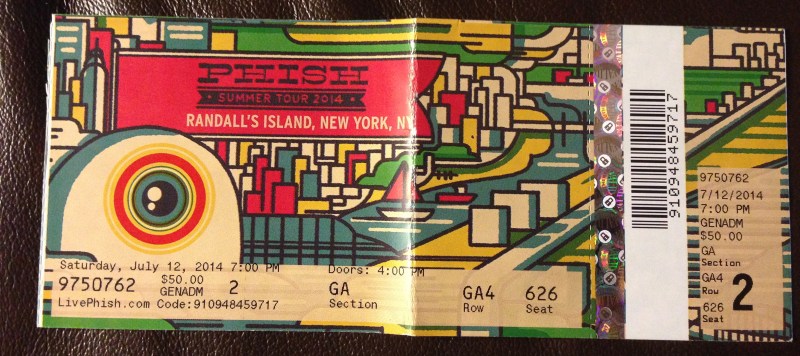
For now I have my one little digital souvenir on LivePhish, and while it would be an audacious task to even attempt and learn a sizable chunk of their work before my next show, at least I have somewhere to start.  See you at MSG.

Not disgruntled lawyers.

Not disgruntled lawyers.

A Critical Look at My Least Favorite Bar That I Regretfully & Routinely Frequent

Standard

Remember your first summer in NYC when your co-worker mentioned to you how there was a big boat in the Hudson you could drink on? Remember stumbling around in the keel, marveling at the ping-pong tables, and embracing the thick stench of an abandoned outhouse as you felt like a true mariner?

Well, from the months of May through September (and April and October when it’s at least 65 outside), you can do it all over again. Pier 66 Maritime (but affectionately-ish known by all as The Frying Pan) offers a full bar and grill from noon to midnight seven days a week in the summer. Although 90% of patrons opt for the over-priced-and-underwhelming $34 buckets of Corona, the 10% who go with the white sangria are rewarded for their adventurous choice. Lime wedges and a silent and emotionless swipe of a card complete the transaction, and if you get there early enough you can even sit down at a table and comment on the odd sculptures strewn about.

While it admittedly is a beautiful and unique way to embrace summers on the Hudson, more often than not you’ll be paying to weave through an endless supply of thirsty elbows. On a Saturday, you better get here by 1:00 pm at the latest, lest risk sweating away last night’s hangover in a multiple-block line hugging the fence on the West side highway.


My friends and I pretending to enjoy ourselves on the boat.

My friends and I pretending to enjoy ourselves on the boat.

The staff isn’t particularly friendly (please keep your appendages, sunglasses, and shame inside the boat), and while a couple Saturday’s at FP are required by the Mid-20s NYC Society each summer, this place just feels like one of those establishments that had its switch flipped from glorious to groan somewhere around the 24th birthday.

Apparently there’s a DJ when the sun goes down, but I always wonder who stays at night when they open up the dance floor. Something tells me it just wouldn’t feel right anyway (like going back to summer camp when everyone’s gone and finding things just aren’t the same).

I think it’s fine to come here for a brief stop with co-workers during the week, or even early afternoon on a weekend before you’re 25. After that, you probably aren’t at risk of having read this anyway.

Suggested attire: Sperry’s, croakies, button-down, misery

Seinfeld: A Love Letter

Image

Here are 5 things you should know about my relationship with Seinfeld:

1) There was a 3-year span from 2006 to 2009 where I watched at least one episode of Seinfeld every day.  I brought every DVD with me to Colgate in a big black binder (along with the episode guide inserts) and uploaded a rotation of episodes to my first iPhone.  We consistently had 10+ episodes on DVR, and my freshman year the Andrews 206 TV would consistently rotate between Feld, the Golf Channel, and 1 vs. 100 each day at lunch while we ate our buffalo chicken sandwiches from the Coop.  I missed an episode at some point senior year, but I’d wager I still get in 0.8 episodes daily.

2) I watched my first episode in 3rd grade while visiting Telluride, Colorado.  My parents and I were planning on going to bed, but after a brief discussion, they agreed I could stay up and watch “The Stall” with them.   It was a mistake, as I soon digressed into a troubled youth, stealing and hoarding excessive rolls of toilet paper from my elementary school restroom into my cubby.  When the teacher approached me asking for the single-ply sandpaper back, I solemnly shook my head and whispered to Ms. Bart that “I [didn’t] have a square to spare.”*

*I may or may not be an unreliable narrator at times

3) Since 2009, Evan Lorey has only referred to me as Jerry.  I am not Mark, DJ Newmark, Terry Richardson, Chase Bradley, Obama, Elvis, or Dylan to Evan.  I am Jerry.

Evan and "Jerry" visit the source.

Evan and “Jerry” visit the source.

4) Since moving to NYC, I have kept a WWJD business card in my wallet.  It’s been an interesting four years, as what Jerry does isn’t always in everyone’s best interest

5) I cried at the end of the finale, but immediately stopped when I became sickened by the song selection chosen for the sign-off.

So let’s begin…


Jerry – Larry – the gang – I’m sorry.  This is so long overdue.  Although you’ve been in my mind and on my screens for close to two decades now, I’ve never taken the time to express in words what you mean to me.  The time has finally come.

Although I subscribe to daily Google Alerts for you, I admit that more often than not they are given a swift swipe away.  “We’ll reconnect this evening,” I think to myself.  So it wasn’t until I was tipped off by a friend about the Top 25 episodes airing on TBS in the next couple of weeks that I decided the time is right to publicly declare my unbridled, never-curbed enthusiasm for all you’ve given me over the years.  And what better way to do this than to reflect on a few of my own favorite episodes?

Sure, I’ve always had a mental list of my favorites (and scenes, and quotes, and characters, and settings, and NYC stock footage, and VHS tapes on Jerry’s shelf, etc.), but it’s not so simple.  There is no true “best” with Feld – for Feld is an entity unto its own; it must be taken as a whole to be truly understood on an existential level.

And yet…it is also a show about nothing; it is a show of four unapologetically self-centered neurotic fools living semi-successful lives.  And to that I say what the hell –  I suppose we can play favorites to a few.

As such, for the next couple of weeks I plan to provide my own list of Top 5 Seinfeld episodes.

With one caveat, however.  You see, when someone asks me my favorite Seinfeld episode, I can never reply with just one.  This is not because I believe there are too many equally brilliant episodes, but it is because I think Seinfeld first must be viewed through three distinct lenses – one for each of its three unofficial eras.  Today I will define the first era and leave you with my favorites from the time period.  Later this week and next, I will move forward with the following two eras and discuss the best from each of those as well.

And we’re off.


Era 1 – The Early Years (Seasons 1-3):

Marked by Jerry’s poor acting and constant breaking of character from Jerry to Jerry, George’s hair and employment, Kramer’s (moreso) serial killer demeanor, Elaine’s Paul Ruddish capability of already knowing she’s going to look the same as Selena in ‘14 as she did as Benes in ’89, and weak ratings, The Early Years still have many moments of pure gold.

Some of my Early Years runner-ups include:


The Best of Era 1: “The Stake Out”

While each of the above episodes is great in their own accord, something about “The Stake Out” sticks with me.

“The Stake Out” was actually the second episode of the show which ever aired, although it was the fifth episode actually filmed/produced.  It encapsulates so much of what the show became and features a similar tone of humor as the rest of the series, but of course, a little less crisp than the flow the series eventually took on.

As a two sentence reminder, this is the episode where, after a brief encounter with a new love interest, Jerry is left with only the individual’s lawfirm (Simon-Bennett-Robbins-Oppenheim-Taft) as a clue to their identify.  He then “stakes out” the office with George to intentionally have a “chance” encounter with the woman.

We get the rare glimpse of jealousy between Jerry and Elaine, as they’re just off the break-up, and we even learn why it didn’t work out between them (“Well, we fight a lot for some reason…and there was a little problem with the physical chemistry…).  This episode also seems to analyze relationships at a much more realistic level than later on in the show.  We watch as Jerry has a very standard open discussion with his parents about his relationship difficulties, and the conversation between Jerry and Vanessa about who the potentially-significant-others were who accompanied them at the party feels like textbook early in the game banter.  In fact, I believe she ends up being the only woman appearing in consecutive episodes as Jerry’s companion.

What I love most about this episode and the stakeout plan itself is that it actually works.  Every time I watch this and hear Jerry say to his father that it “really isn’t that bad of an idea,” I can’t help but think the same.  It’s really not that different than taking a certain middle school elective due to your love interest in someone, and I see it as far less creepy than stalking someone on social media today (although that would likely be the Modern Seinfeld equivalent today).  In fact, Vanessa likely knows exactly what’s going on, but it’s OK.  The scene and show are summarized perfectly as Jerry asks if she dates immature men (“Almost exclusively.”).

I’m also not sure many casual fans realize the birth of Art Vandleay occurred so early on in the series (the quick progression of Bert Harbinson to Art Corr to Art Corvelay to George mistakenly saying Vandelay is a clip that feels like it could be from any year of the show).

And one last random note on my love for “The Stake Out”.  My favorite bit within this episode is Elaine’s description of her dream involving Jerry and his wooden teeth.  I think this beats out Jerry’s own dream description later on in “The Van Buren Boys” (“I had a dream a hamburger was eating me!”).

So thus marks the start of the Seinfeld series, and really the blog itself.  Tune in later this week for more on The Golden Age (Seasons 4-6), The Cartoon Years (Seasons 7-9), and other bits of potentially fantastic, seemingly trivial Seinfeld matters, fittingly here at NewMark New York.