
I declare this, The Tale of the Ghost Bodega.
It doesn’t add up. Back in 2010 I lived in no-man’s-land Hell’s Kitchen – we’re talking newly developed 10th Avenue territory near the old Hudson Yards and Javits Center – and I was in utter dismay when I heard what our local sandwich shop was paying for rent.
I’ll call this an “upscale bodega”, if there were such a thing. It’s blessed with a name that suggests a genuine establishment (i.e., doesn’t contain the words “Gourmet”, “24”, “Cigarettes & Candy”, or “Periodicals”). Sure, they had the standard $7 subs and salads, but you could also get a side of Snapple for $3, and if your Smart Water was big enough, it just might cost a Lincoln. So, I knew they were trying to make up that rent somehow. But how much rent?
Apparently $30,000. At least that’s what the manager told us. Granted, this is the same man who relentlessly preached his alternative religious views and bestowed free literature upon us on us each holiday season while slicing spiced ham, so I admit that credibility might be a concern here. Regardless, I only had his word to go on, which translated to $360,000 a year, or basically $1,000 a day in rent alone. I was astonished, and while skeptical, I knew that in New York City one should never dismiss the price of anything, regardless of how insane it sounds.
Soon after, when I heard about the Gray’s Papaya landlord wanting to raise their rent to $50k(!), I realized this was probably for real . Suddenly selling overpriced Snapple seemed like an easier way to turn a profit than a glorified hot dog stand.
But then the real question came along: how can there be so many bodegas that are still in business?
Sure, I realize that there have been more 7-11s popping up on street-corners lately, replacing “News and Dairy”‘s wilted lettuce with fresh cheeseburger rolls and $5.99 large pepperoni pies, but I really can’t fathom how so many standard, low-scale Ghost Bodegas are still afloat.
What’s a Ghost Bodega, you ask?
Trust me, you’re plenty familiar with them. I’m referring to all of those fruit-on-the-outside joints with Haribo licorice wheels spinning around on candy racks that have acquired a thin layer of dust. These are the same places that have the Vitamin waters with faded labels and e-cigs with packaging from the ’90s. Some of them, heaven forbid, still sell DVDs for the price of two months Netflix.
They’re something of the past, a thin veil of what once was, and I can’t conceivably understand how they can be making money.
I know the marketing can’t be doing much to help. Have you considered the names of these places? It’s as if the bodega owners surveyed a group of New Yorkers in ‘80s and asked what they wanted from their local market at 4 in the morning before a cross-country drive.
“Oh, I’d like a pack of Reds, a liter of Crystal Pepsi, maybe some Turkish Taffy to slap on the dash, and how ‘bout a Road & Truck and a Reader’s Digest. I do have a soft spot for that Laughter is the Best Medicine section.”
Of course, rather than call themselves “Stock Up”, “Any & All”, or “Needful Things”, they seem to just combine as many of the products as possible into the name, with something like “24-Hour-Beer-Tobacco-Lotto-Candy Inc.” as the typical result.
For the walk-in crowd looking to pick up a quick item, I know it really doesn’t matter what the name of the place is. But, if I lived in that area and all bodegas were essentially the same, you better believe my friends and I would always choose “names” (I’m thinking Spyros here) over “XYZ Grocery”.
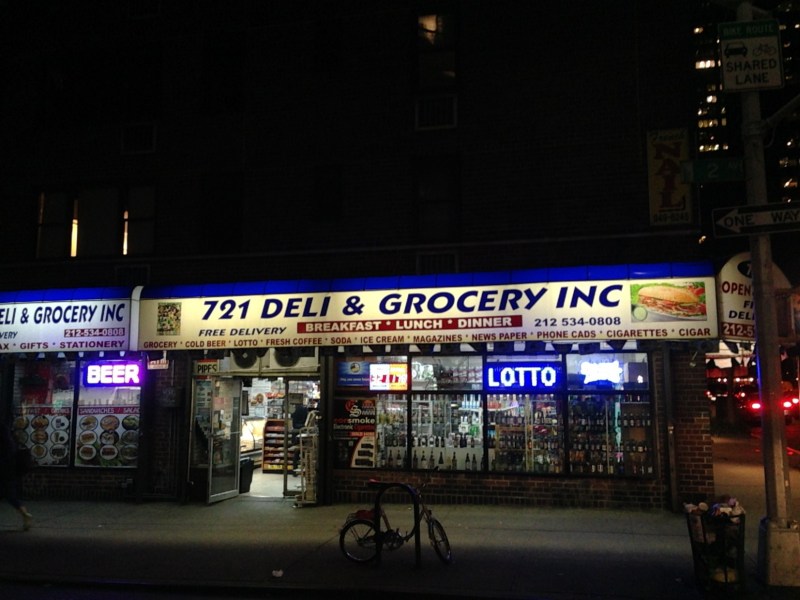
In fact, I actually watched a new bodega go in two years ago on 39th and 2nd. This place had an opportunity to call itself ANYTHING – and do you know what the owners chose?
721 Deli & Grocery Inc.
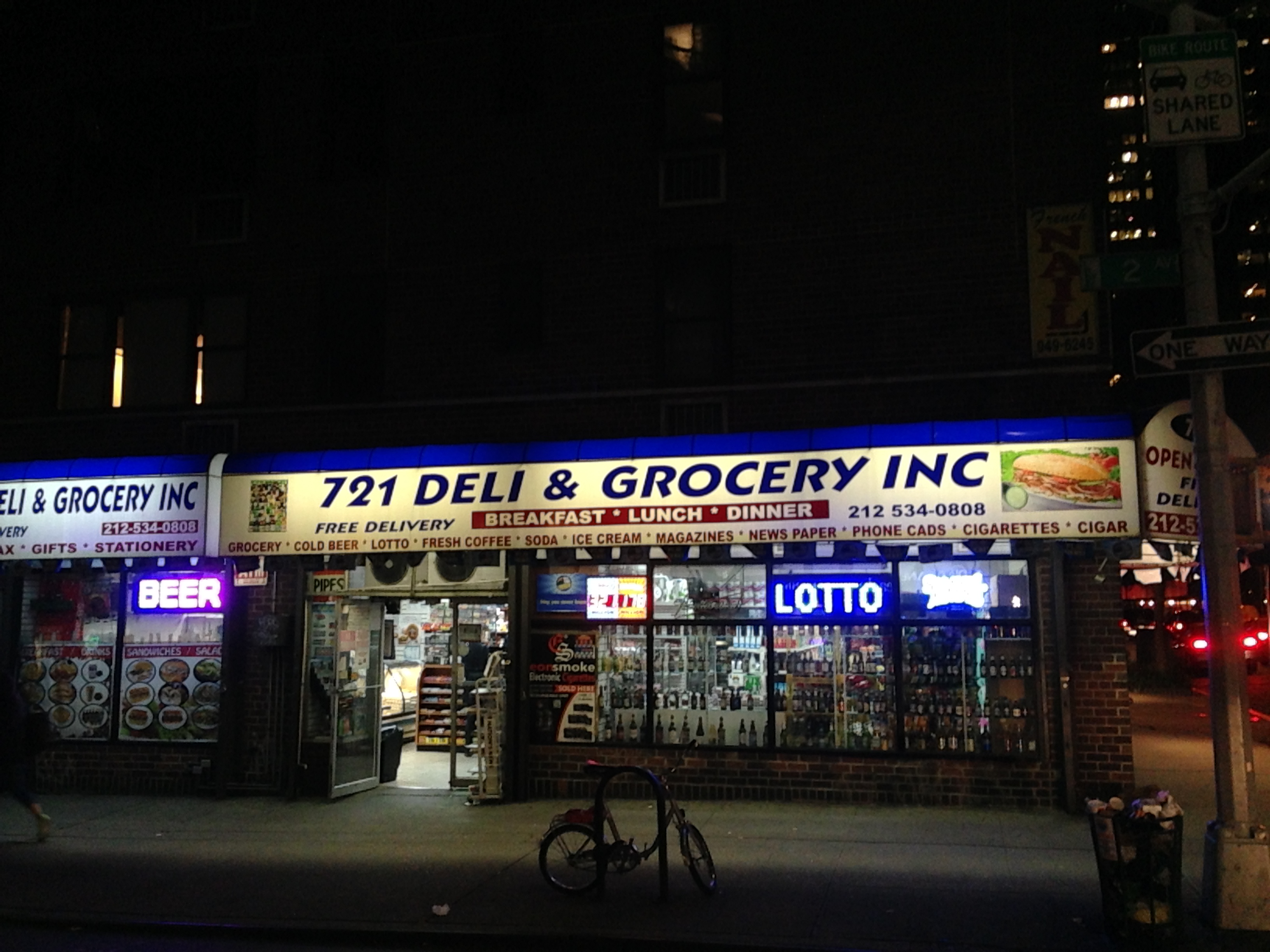
The sign specifically notes that 721 sells, among other things:
- Newspaper
- Phone Cards
- Fax Services
- Stationary
- Breakfast, Lunch, and Dinner
I don’t think any of that is luring me in off the street.
Sometimes I wonder if this general sign tactic is similar to the greasy spoon Chinese restaurants purposely misspelling menu items to increase the perception of authenticity. But what would be the point of that here? What’s it mean to be an authentically average bodega? If I see this sign, is it supposed to alert me that the place I’m walking into is guaranteed to have melon flavored Hi-Chews, Goya black beans, unmarked yet commercially made loaf cake, stray cats, and a $10 credit card minimum?
I want these bodegas to tell me – what do you have that differentiates yourself? What do you have that Duane Reade doesn’t, besides a more rational employee attrition rate and Wheat Thins under $8? Please Bodega, Be Well and tell us about it.
So how do they make any money at all?
Are the margins so high on shrink-wrapped strawberry jam pinwheels that thousands of dollars are taken in each day, or is something else going on?
I could see 20 years ago before the Starbucks influx, maybe, but not today. Not when the only time I go in there is for a cheap sub sandwich, a bottle of water, or a pre-packaged crumb cake I want to try as an evening experiment.
Maybe a lot of these places aren’t actually making money and are hanging on by a thread, but a lot of them really look like they’ve been around for a LONG time.
And it’s not even just bodegas. There are ghost restaurants too.
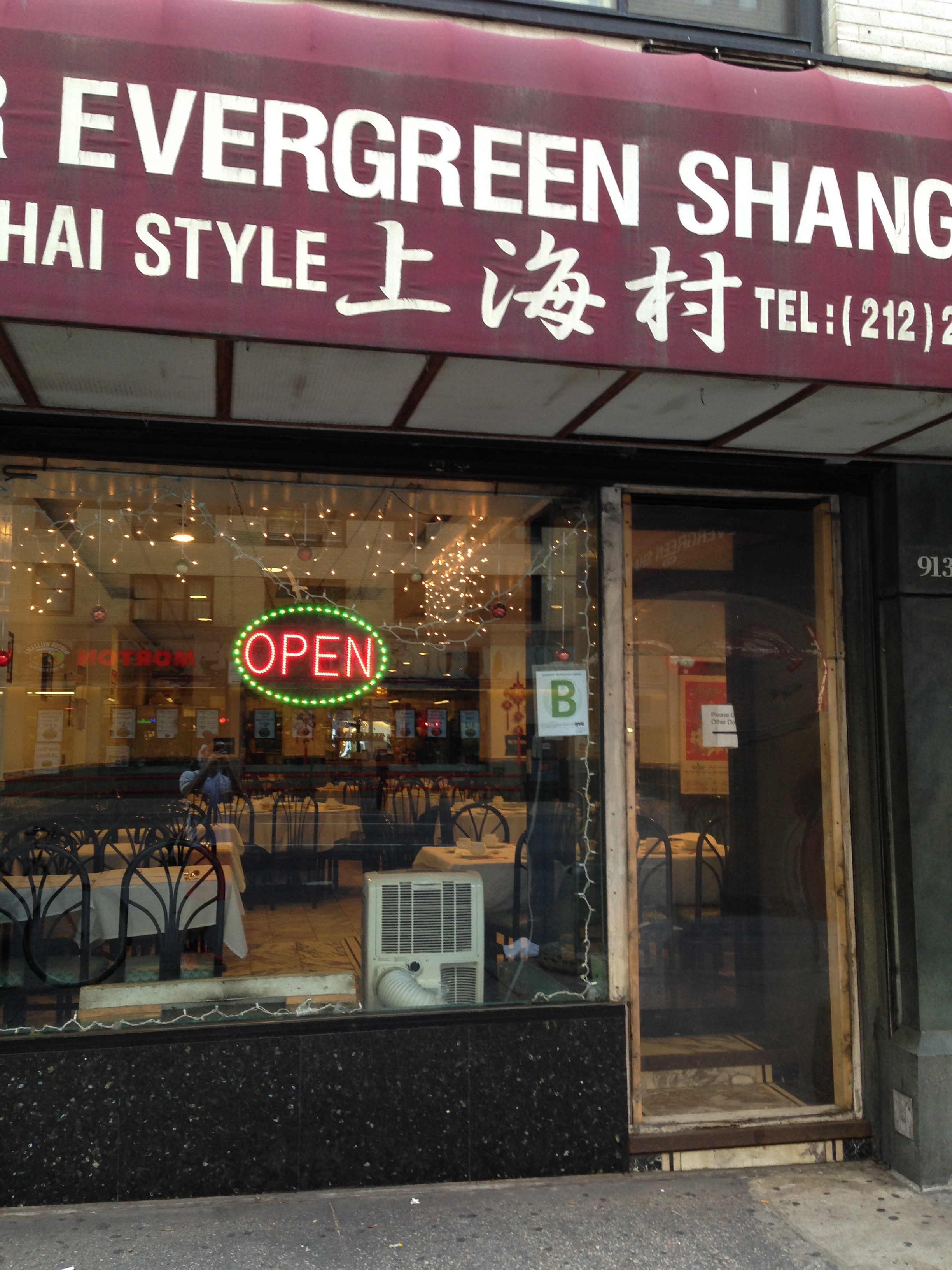
I think my favorite example of this is a Chinese restaurant near me in Midtown East. It has a large dining area that’s perpetually empty no matter the day of the week, save for a table of the family who owns the joint. And there’s actually a full bar in the back where a bartender stands around waiting, like the start of a tense scene in a Bond movie where James walks into an empty room only to be bombarded from behind.
I think Lawrence C. explains it best on Yelp:
“What I’m saying is, this joint is shady in a way that Midtown East usually doesn’t engender. Poorly lit (just as well, with decor that uncannily recalls a highway rest stop’s public bathroom), outfitted with frankly decaying lazy Susans, and, again, deserted. The place should’ve been in “I Am Legend” somewhere.”
I don’t have the answers here. Even if they own the building, why aren’t they renting out the space to more profitable tenants?
I will say that these places do provide me some fairly serious entertainment. One of my favorite post-gym activities is venturing into an empty Tasti D-Lite nearby and pretending I’m in a 1991 food court, with the pink floor tiles all chipped and faded like Chiclets at the bottom of an old gumball machine. I think I’m the only one who has bought their marshmallow gummi sharks this decade.
Anyway, at the end of the day I’m left with a few ideas, but frankly I still don’t really understand. Here’s what I’ve got as theories for how these places remain open:
1) There’s more to the story – whether this means the shop or restaurant is selling used playground equipment on eBay or something more unsavory is going on behind closed doors, there’s more than meets the eye.
2) The owners of the shop/restaurant own the building and it is more affordable/tax advantageous to keep operating with minimum costs than to rent it out.
3) They’re losing money and it’s only a matter of time before they’re out.
It’s sad that this even has to be written. It’s sad that a small business is assumed to be failing because a city is so chain-ridden and expensive and the 7-11s can’t even buy as many shops as they want yet.
But, I guess that’s why we have Forgotten New York and Scouting New York to provide a way to look back at the way it all once was. As for me, I’m off to get a shaken martini and half order of Kung Pow prawns.
 NewMark New York